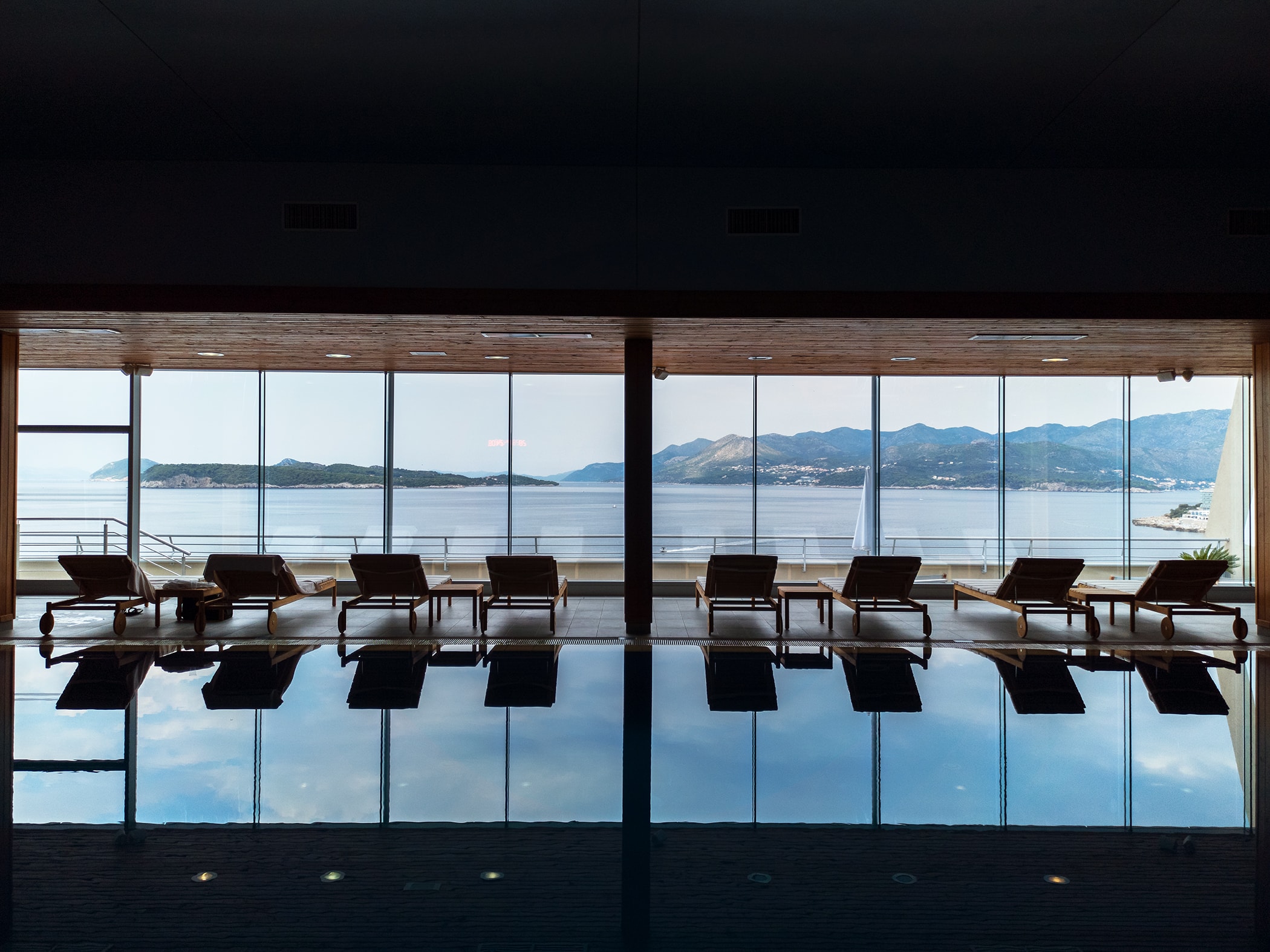
Main 40mp Camera | RAW | Processed in Photoshop
This is a bit of a sore topic in the photography world, or at least one with a war of words attached to it. With small sensored compact cameras all but extinct, the mobile phone and it’s capabilities are stronger than ever. But a lot of ‘photographers’ refuse to accept it as a valid format. There is, without doubt, a superiority complex amongst the camera wielding community and it’s something thatI would love to see change, certainly in order to evolve.

Night Mode | 5-second handheld exposure
Photography is or can be an art form. Some images represent skills and vision that are uncommon, just in the same way that a watercolour painter or musician. Definitely, for some, the idea that a smartphone (that thing that everyone seems to be glued to since 8 hours a day) can be a valuable tool for a photographer and capture great images, is a little offensive. Surely nothing artistic can be achieved with such a consumer item? It’s something that I wholeheartedly disagree with.

Main 40mp Camera | RAW | Processed in Photoshop | 30-second exposure
It’s pretty hard to believe that phone cameras have been around nearly 20 years at the time of writing. In the early days, or even early 10 years or so, the technology was very primitive, offering pretty naff rear cameras that really only hold up when looking at the image on the phone itself. I don’t really want to delve into the history too much though, instead focus on the present and future of mobile photography.

Main 40mp Camera | RAW | Processed in Photoshop
I will be the first one to say, that a mobile phone won’t ever replace a ‘proper’ dedicated camera. Firstly they won’t ever be quite as good and secondly I don’t enjoy using them as much, but they certainly have their place, for me at least.
I have probably spent days of my life researching compact, take anywhere cameras that can extend my opportunity to shoot. I was always looking for a small camera that can be carried ‘everywhere’ without excuses. Often I saw a shot that I wished I had been able to capture… I have purchased several of these cameras, ranging from the compact king Sony RX100 to the Ricoh GR, but the common problem was, that I ended up leaving them all at home. With a phone, wallet and keys to lug around, adding another small camera really is a burden in everyday life.
Bud, for the first time, I feel that I have a camera in my phone that is good enough to use for serious photography, at least for the most part. For me, this is pretty exciting.

Main 40mp Camera | RAW | Processed in Photoshop
This is by no means a sales pitch for the Huawei P20 Pro, but it’s possibly going to be a mini-revolution for my photography so I had best mention it. With 40 megapixels in the main camera on a 1/1.7 inch sensor (large for a compact let alone a mobile phone), a dedicated 20-megapixel monochrome sensor and 3x Tele lens on a smaller sensor, it is fully kitted out. What really impresses me was the 1/1.7 inch sensor size. Meaning there is vastly more light that is hitting the surface of the sensor vs other cameras of its type. Instead of limiting the MP to say 12-16 like other brands, they have favoured an increase in the pixel count, and considerably so too. In good light, photographs are sensational for a phone and this is the key point to remember, it’s a phone and has a tiny fixed lens and aperture. I will post some full res downloads below. Images are sharp in the centre even at full resolution, however, this does fall off slightly towards the edges of the frame, but considering that its a fixed F1.8 lens it is not surprising. There is no option to stop down the lens to a smaller aperture which is a shame.
Although it is a true 40mp sensor, the lens really doesn’t capture 40mp of detail. Potentially in some areas, it gets close but at the extreme borders it’s poor and gets noticeably better the closer to the centre you go.

Main 40mp Camera | RAW | Processed in Photoshop | 20-second exposure
In lower light, however, the 40mp camera is just ok. It still captures decent images but there is a noticeable smearing with some added noise to boot. However, the DNG files are quite incredibly malleable and you can still resurrect a very usable image in poor light.

Night Mode | 5-second handheld exposure
The monochrom sensor is remarkable, capturing as much detail at the 40mp sensor seems to, and its sharp all over the frame too. The Monochrom sensor has been a Leica favourite for a number of years now, and with the removal of the colour filter, the sensor only has to determine the grey tone rather than splitting the light into colours, hence the sharp and detailed image. The 3x zoom is welcome too and with good quality, but I rarely use it.

20mp Monochrom Sensor
This is where a phone sets itself apart… Current flagship devices have memory, processors, and simplicity that some full-size computers are jealous of. They are premium items with normally excellent build quality, waterproof designs, convenient cloud storage options, bundles of accessories, gorgeous touch displays that won’t be seen on cameras for a decade, all in a compact design that is always in your pocket. The latter, for me is the most important. The best camera is the one you have with you. I have already taken shots with this camera that I would otherwise not have got.

Main 40mp Camera | RAW | Processed in Photoshop
Let me say this now, the Huawei is of course not the only option here. Almost all flagship phones or those that have a solid camera are more than adequate. Have you seen the billboards with the ‘shot on iPhone’ advert? Or the mobile photography awards? These images are truly spectacular and unless you are pushing the files to the limits nobody would have guessed they were taken on a phone. it really is only when you start getting to 70-100% resolution that it becomes apparent it’s a phone, or small sensor.
Main 40mp Camera | RAW | Processed in Photoshop
Where phones really excel now is the technology. For example, I can take a shot using the main 40mp camera in super high contrast conditions on a sunny day and the intelligence of the device will output an HDR-like raw image. Sure, this might not be the style you wanted, but what it does do is leave you with a tonne of headroom for editing as it retains all of the shadow and highlight data. Another example of clever tech… I shoot an image in low light with the 5x telephoto option, the camera uses data from the main 40mp sensor along with noise data from the superb monochrom sensor to give you a more detailed and lower noise image. It’s brilliant stuff and what’s better still, you don’t even realise it’s happening.

Main 40mp Camera | RAW | Processed in Photoshop
Considering that this is really the first (second if the old Nokia from 2010 counts) generation of larger sensors in phone cameras, they have done a stellar job and the quality will only improve year on year. Sony has already announced the development of a 48mp 1/2 inch sensor, that is likely to be in use very soon.
Of course, there are still huge limitations to using a small device. The sensor size limits low light capabilities. They’re not ergonomic or very intuitive, thus they are hard to hold still beyond the wide angle lens. The opportunity for shallow depth of field is nonexistent, other than the software version, but I am still opposed to that as it looks fake.

Main 40mp Camera | RAW | Processed in Photoshop | 20-second exposure
When comparing to a M43, APSC or FF camera, there is really little comparison when viewed at full resolution, especially in the RAW file. But with work in photoshop they can be made to look very good. If instagram or 500px is your medium for the images you shoot, you’ll see little difference between this and any ‘real’ camera

Main 40mp Camera | RAW | Processed in Photoshop
I look forward to seeing a 1 inch sensor with a variable aperture in the near future.